
As it readies for its initial public offering (IPO) later this year, digital payments firm Paytm is honing its strengths to remodel itself from being a payment wallet to becoming a financial services provider, and is working towards narrowing its losses, evident from its most recent Annual Report. Unlike many of its peers, Paytm has started expanding its merchant payment ecosystem. It has realised that though it can take the maximum share of the Unified Payment Interface (UPI) transactions, from a revenue generation point of view it will not have any impact.

'Just the amount of work which is there just to become more and more successful in banking. For this to happen you need to have leaders who understand technology.'

Shivani Shinde reports. The youngest member of the Tata group, the much-awaited Tata Neu, has finally been launched for people across the country. The 'super app' offers a number of services ranging from financial services to tech, travel and even groceries. The app takes off with a customer base of 120 million, with 2,500 offline stores. According to the Tata group, the app will be a one-stop destination for all consumer needs. The super app also offers a bouquet of financial offers like Unified Payments Interface (UPI), bill payments, loans and insurance. Tata Neu will also provide other services like fashion, gadgets, groceries, travel and health.

Financial institutions are 300 times more vulnerable to cyberattacks than any other industry.

A mobile wallet may offer discounts but allows transactions of limited amounts. And, while a bank app or internet account allows larger transactions, it might be less convenient

Experts believe that the sector should not jump to conclusions on WhatsApp Pay, which is still in its 'Beta testing' phase.
They straddle many different (non-financial) lines of business with sometimes opaque overarching governance structures.

In an otherwise agriculture- and public health-focused Union Budget 2018-19, artificial intelligence, machine learning, blockchain technology, internet of things -- jargons that found little or no mention in the previous Budgets -- managed to make their presence felt.

The payments industry is at a crossroads with the banking regulator on two pressing issues, neither of which seems headed towards an amicable solution. Depending upon which side accommodates the other, customers in India will have to choose between convenience and ironclad safety. In the end, the Reserve Bank of India (RBI), which regulates both banks and all payments services providers, will prevail. But the question is: will it do so by bending a little or by sticking to its firm stand? The two issues - one concerning payment facilitators storing customers' card details and the other about auto-renewal of payments - appear similar but aren't.

Mobile payments alone gathered close to $1.51 billion in the year 2017 through 13 rounds of funding, according to data compiled by Tracxn

India will grow at around 7.4 per cent in 2022-23 and continue at the same pace in the next year as well, Union Finance Minister Nirmala Sitharaman said on Friday. Sitharaman said there are risks on the external front and this is not the right time to throw caution to the wind, and also assured exporters of all the necessary support from the government as they face the headwinds. Speaking at the FE Best Bank Awards event here, Sitharaman said global agencies like IMF and the World Bank have taken cognisance of the strengths of the Indian economy by saying that it will be among the fastest growing ones in the next two years.

The seizure, as per officials, is estimated to be worth over Rs 10 crore in the international market (about Rs 5K-7K per blot) and all the six who have been taken into custody, beginning late last month, are students and youngsters who wanted to make 'easy money' by remaining anonymous within the deep layers of secret internet-based apps and messenger service like WICKR.

The Indian startup ecosystem has lauded the inclusion of startups in the New Delhi Leaders' Declaration for the first time ever in the history of G20. Industry stakeholders say that the move will lead to easier access to capital, reduce regulatory hurdles, and may revive funding activity. The Declaration, through the Startup20 initiative, recognised startups as "natural engines of growth" and key to socio-economic transformation by driving innovation and creating employment.
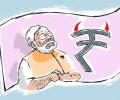
It is a classic case of extremes: The worst contraction in GDP along with the highest-ever levels of cash in the economy; and a severe dent in consumption together with strong growth in bank deposits and digital payments.

'The Indian economy and the Indian financial sector today remain resilient and much better placed.'

A fresh PIL was filed on Thursday in the Supreme Court seeking a probe by multiple central government agencies under the supervision of a panel or a former apex court judge against the Adani Group of companies following allegations of fraud and share price manipulation made by the US-based Hindenburg Research.

The future of cryptocurrencies in India appears uncertain but that has not deterred young Indians from embracing the so-called 'fourth industrial revolution' world, where interconnectivity and smart automation, much of it relying on blockchain technology, drive human civilisation. Reserve Bank of India (RBI) Governor Shaktikanta Das has repeatedly warned of macroeconomic instability and even "serious consequences" if cryptocurrencies turn mainstream. The country's monetary authority wants a China-like total ban on crypto, not even allowing these currencies to be treated as investments. Though Parliament's website had listed the Cryptocurrency and Regulation of Official Digital Currency Bill as one seeking a total ban of cryptocurrencies in the country, it was not presented in the Winter Session. India now has the highest number of cryptocurrency investors in the world.

'To the believers of crypto regulations, I have only one question to ask, how will you regulate it?'

The RBI said the payment systems landscape will continue to change with further innovation and entry of more players which is expected to ensure optimal cost to the customers and freer access to multiple payment system options.
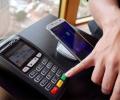
For those who are sceptical about using debit or credit cards, even when faced with cash crunch, Adhil Shetty, CEO of BankBazaar.com, lists out a few safe cashless options that can be exercised through mobile phones.

A 40-year-old freelance journalist has claimed a person 'hypnotised' him over the phone and duped him of Rs 40,000, but police and experts said this is one of the 'most normal kinds of cyber fraud' and not a case of hypnosis.

Paytm will look to raise up to $1.5 billion as part of primary share sale, leading up to its initial public offering (IPO), which is planned for November, a person familiar with the developments said. The company is looking to file its draft red herring prospectus (DRHP) by July, according to sources. According to this person, though the details of the listing are being worked out, Paytm may take the qualified institutional buyer (QIB) route to list and issue fresh equity to raise funds.

Don't recharge your phone at public outlets -- carry a power bank instead. Avoid clicking on links sent by 'friends'. If you get into an online sexual encounter with a stranger and get blackmailed, refuse to pay up.

Chief Justice of India (CJI) D Y Chandrachud's first 100 days in office saw the Supreme Court take a giant leap towards reforms, especially making courts more technology-friendly, and ensuring relatively fast judicial appointments including those of eight judges to the apex court.
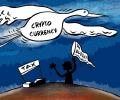
While the tax treatment does legitimise past crypto transactions, there is a possibility that any, or all, private cryptocurrencies will be banned in future.

In such frauds customers get calls asking them to share their OTP in order to postpone their loan EMIs. Once the OTP is shared the amount is immediately siphoned away by fraudsters.

Big retailers are openly talking of plans to harness the power of big data, even reporting those in annual reports as part of a long-term strategy.

Airtel CEO Gopal Vittal on Thursday warned about a rise in cyber frauds amid a massive surge in online transactions during the second wave of the pandemic, and asserted the company is working "relentlessly" and coming out with safety features to ensure customers are not vulnerable to fraudsters. In an e-mail outreach to customers, Vittal highlighted the modus operandi being adopted by fraudsters and also drew attention to cyber frauds related to digital payments. "With the growing second wave of the pandemic and lockdowns in various parts of the country, there has been a massive increase in online transactions. "Unfortunately, there has also been a corresponding increase in cyber fraud," Vittal said.

The Reserve Bank of India (RBI) on Wednesday announced to increase the policy repo rate by 50 basis points to 4.9 per cent, the second hike in five weeks aimed at quelling the inflation. The MPC vote was unanimous and has decided to keep stance withdrawal from accommodative, RBI Governor Shaktikanta Das said in a press conference on Wednesday. The decision was taken during a three-day meeting of the RBI's Monetary Policy Committee (MPC) to review the interest rates in the country. The MPC voted unanimously to increase the policy repo rate by 50 bps to 4.90 per cent," Das said.

The Union Cabinet on Wednesday approved a Rs 76,000 crore policy boost for semiconductor and display manufacturing ecosystem in the country in an bid to position India as a global hub for hi-tech production. Announcing the decision of the Cabinet, IT and Telecom Minister Ashwini Vaishnaw observed that electronics plays an important role in everyday life, and semiconductor chips forms a crucial part of electronics. Outlining the details of the scheme, he said the Rs 76,000 crore programme has been approved for the development of semiconductors and display manufacturing ecosystem.

Using the app, bank transfers can be done from/to any bank account, making it easier to make payments at no charge. Even non-KYC Paytm users can avail the facility.

Under the proposed mechanism, the finance ministry has said banks will notify customers when someone tries to deposit money in their accounts, a government official said.

Microsoft has become the first global Big Tech company to join the Open Network for Digital Commerce (ONDC), an Indian government initiative for developing a first-of-its-kind open network for digital commerce. The world's second-largest technology firm intends to introduce social e-commerce via its app in the Indian market later this year. ONDC is expected to open to the public in Bengaluru over the next fortnight as it enters into the next phase of the pilot for further fine-tuning before rollouts in other cities, according to a source in the know.

'Demand is wonderful. We have crossed 10 million on many days.' 'The Swedish trade commissioner recently said, "You guys are vaccinating the entire Sweden in one day".'

Prime Minister Narendra Modi on Sunday called for the setting up of a high-power police technology mission under the leadership of the Union home minister to adopt future technologies for grassroot policing requirements.

'Google and Facebook need to be tamed, their garb of 'Investing in India's future' need to be pulled off,' observes Vibhu Arya.

Compared to a 64 per cent penetration in Brazil (130 million users total) and 53 per cent in China (total 733 million users), India has barely 28 per cent penetration. Of the digital reach, almost 80 per cent are from affluent segments in urban areas. How can this change?

Prime Minister Narendra Modi on Thursday inaugurated and laid foundation stones of development projects worth more than Rs 38,000 crore in different sectors in Mumbai, giving a big push to infrastructure, urban travel and healthcare ahead of civic polls in the city in which the Bharatiya Janata Party and the Eknath Shinde-led Shiv Sena faction will seek to showcase these ventures to take on their political rivals.
'There is no doubt at all that Jio's disruption of the mobile broadband market was a turning point for India's digital economy.'
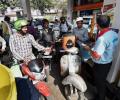
Credit card payments to buy fuel at petrol pumps will from October 1 not get a 0.75 per cent discount that State-owned oil companies had introduced more than two-and-a-half years back to promote digital payments.
